Concrete Patios vs Pavers: Choosing the Right Backyard Surface
Planning an outdoor space? A 2023 report projects concrete paver sales reaching $11.2 billion by 2032, highlighting the growing popularity of outdoor living. Selecting the right material is crucial for aesthetics and functionality. This guide dives into the pros and cons of concrete patios vs pavers, helping you choose the best option for your backyard. We’ll explore factors like cost, durability, design flexibility, and installation to aid in your decision. When considering concrete patios vs pavers, remember that your choice impacts both the look and longevity of your backyard patio design. Let’s determine which of these patio materials is best for you.
Concrete Patios vs Pavers: A Detailed Comparison of Backyard Options
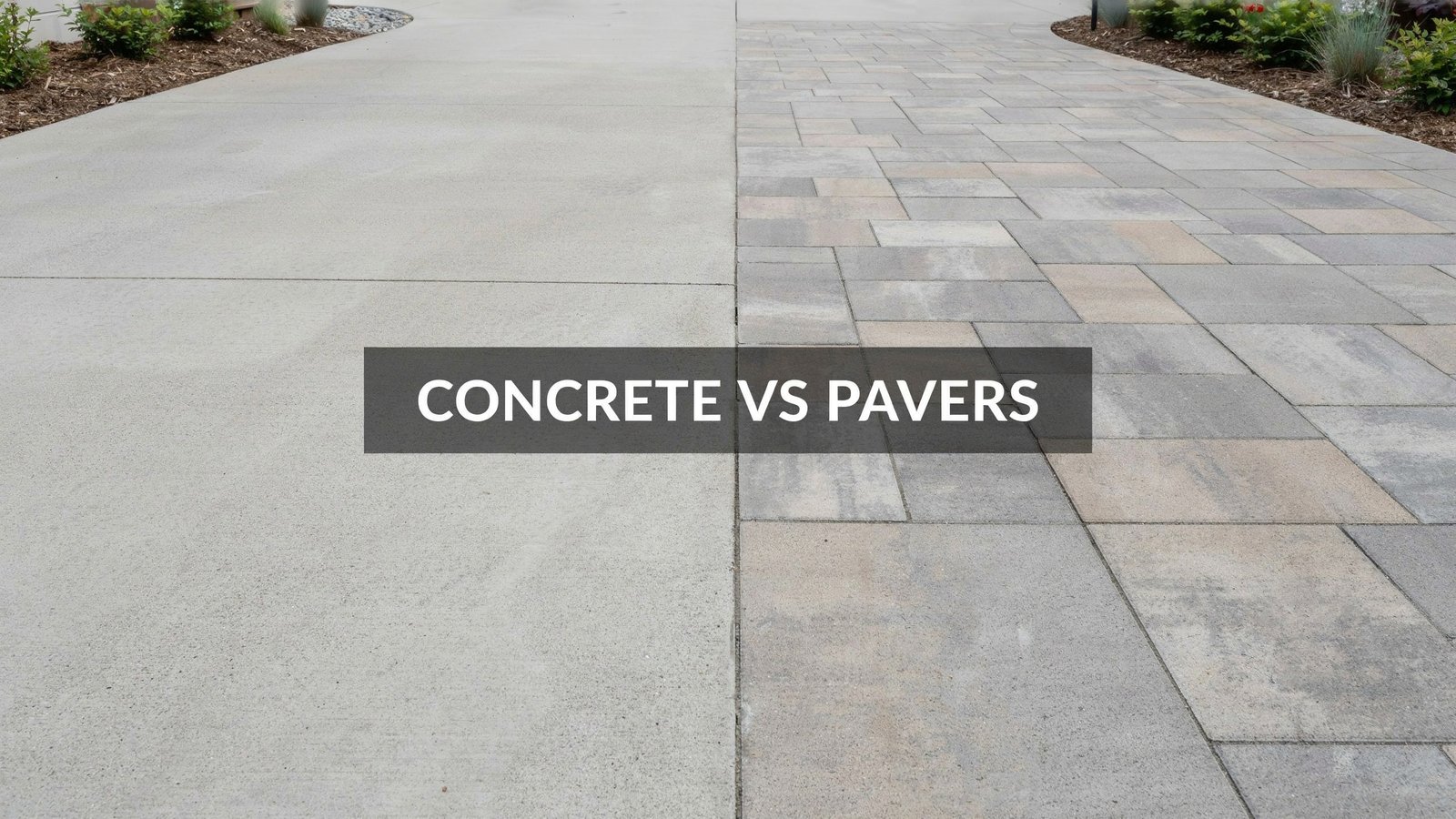
When considering concrete patios vs pavers, understand that both create durable and attractive outdoor areas, but they achieve this in different ways. Concrete patios are typically a single, monolithic slab, while paver patios consist of individual units made from concrete, brick, or natural stone. Understanding the differences between these patio materials is essential for making the right choice for your backyard patio design. The decision between concrete patios vs pavers also significantly affects the overall project cost. Therefore, it’s crucial to compare the concrete patio cost with the paver patio cost.
Cost Considerations: Concrete Patios vs Pavers
Cost is a significant factor when evaluating concrete patios vs pavers. Initially, concrete is often less expensive to install compared to a paver patio. This is primarily due to the simpler installation process of pouring concrete versus individually laying pavers. The concrete patio cost is primarily determined by the price of the concrete mix, the formwork required to contain it while wet, and the labor involved in pouring and finishing the surface. However, the long-term costs of concrete patios vs pavers can vary significantly.
- Concrete Patio Cost: Typically cheaper upfront, ranging from $6 to $12 per square foot, including materials and labor.
- Paver Patio Cost: Generally more expensive to install, typically ranging from $10 to $20 per square foot, due to the increased labor and material costs.
While the lower initial concrete patio cost may seem appealing, it’s crucial to consider potential future expenses. Concrete is prone to cracking, especially in areas with fluctuating temperatures. Repairing or replacing cracked concrete can be costly. Pavers, on the other hand, can be individually replaced if damaged, potentially saving money on repairs. Therefore, when comparing concrete patios vs pavers, consider the total cost of ownership, not just the initial investment.
Durability and Maintenance: Comparing Concrete and Paver Patios
Longevity and maintenance requirements are vital considerations when choosing between concrete patios vs pavers. Concrete patios, while seemingly robust, are susceptible to cracking due to ground movement, weather conditions, or heavy loads. These cracks not only detract from the aesthetic appeal but also compromise the structural integrity of the patio. Paver patios offer better resistance to cracking because individual pavers can shift independently, accommodating ground movement and minimizing the risk of significant damage. Proper maintenance is crucial for both concrete patios vs pavers.
- Concrete Patios: Require regular cleaning and sealing to prevent staining and water damage. Major cracks necessitate professional repair.
- Paver Patios: Generally require less maintenance. Individual damaged pavers can be easily replaced. Regular sweeping and occasional washing are typically sufficient.
Pavers, when properly installed and maintained, can often outlast concrete. When considering concrete patios vs pavers, factor in the long-term maintenance requirements. Which of these patio materials aligns with your maintenance preferences and budget? This will significantly impact your backyard patio design and overall satisfaction.
Design Flexibility: Choosing Between Concrete and Paver Patios
Design flexibility is a key differentiator when comparing concrete patios vs pavers. Pavers offer a significant advantage in this area, coming in a wide array of shapes, colors, and textures. This allows for the creation of unique and custom backyard patio designs, perfectly tailored to your personal style. While concrete can be stained or stamped, the design options are more limited. The choice between concrete patios vs pavers largely depends on your desired level of design customization.
- Concrete Patios: Offer limited design options. Stamping and staining can enhance the appearance, but the overall look remains relatively uniform.
- Paver Patios: Provide extensive design possibilities. A wide variety of shapes, colors, and textures allow for intricate patterns and custom designs.
If you desire a backyard patio design that reflects your individual style, pavers are the preferred choice. You can incorporate borders, create intricate patterns, and mix colors and textures to achieve a truly unique look. Concrete simply cannot offer the same level of customization. While the initial paver patio cost may be higher, the enhanced design flexibility can create a truly special outdoor space. When evaluating concrete patios vs pavers, consider your design priorities.
Installation Process: Concrete Patios vs Pavers
The installation process for concrete patios vs pavers differs significantly, impacting the project timeline and required skill level. Concrete installation involves preparing the subgrade, constructing forms, pouring the concrete, and finishing the surface. This requires specialized tools and skills to ensure a smooth, level, and durable surface. Paver installation involves preparing a gravel and sand base and then carefully laying each paver in place. While paver installation is more time-consuming, many homeowners find it easier to DIY compared to concrete. The concrete patio cost might be lower due to the faster installation time, but consider the expertise required for concrete work.
- Concrete Patios: Require specialized tools and skills for pouring and finishing. The process is generally faster than paver installation but less DIY-friendly.
- Paver Patios: More DIY-friendly. However, proper base preparation is crucial. Installation is more time-consuming than pouring concrete.
A solid base is essential for both concrete patios vs pavers, preventing settling and cracking. A poorly prepared base is particularly detrimental to concrete. Repairing cracks in concrete is more costly than replacing individual pavers. When considering concrete patios vs pavers, assess your DIY capabilities and the availability of skilled contractors in your area. Choose patio materials that align with your skill set and resources.
Environmental Impact: Concrete Patios vs Pavers
Environmental considerations are increasingly important when choosing between concrete patios vs pavers. Concrete production is an energy-intensive process that contributes to carbon emissions. Pavers, particularly those made from recycled materials, offer a more sustainable alternative. Some pavers are also permeable, allowing rainwater to infiltrate the ground, reducing runoff and improving water quality. Choosing between concrete patios vs pavers can reflect your commitment to environmental responsibility.
- Concrete Patios: Cement production generates significant pollution.
- Paver Patios: More environmentally friendly. Look for recycled content or permeable pavers.
While concrete can be recycled, the process requires energy. Pavers can be easily lifted and reused, minimizing waste and conserving resources. When considering concrete patios vs pavers, take a long-term perspective. Which patio materials will contribute to a more sustainable backyard patio design? The short-term concrete patio cost savings may be offset by the long-term environmental impact.
Resale Value: Concrete Patios vs Pavers
Consider the potential impact on your home’s resale value when choosing between concrete patios vs pavers. An attractive patio can enhance your home’s curb appeal and increase its market value. Paver patios may offer a slight advantage in terms of resale value, as they are often perceived as more aesthetically pleasing and durable. However, the impact of choosing concrete patios vs pavers on resale value depends on buyer preferences.
- Concrete Patios: Can contribute to your home’s resale value. Pavers may have a greater impact.
- Paver Patios: May increase your home’s market value due to their aesthetic appeal and perceived durability.
Ultimately, buyer preferences will depend on various factors, including the overall design of your yard, the quality of the installation, and local market trends. A poorly designed paver patio may not be as appealing as a well-maintained concrete patio. When considering concrete patios vs pavers, prioritize creating an attractive and functional outdoor space. Let the concrete patio cost or paver patio cost be viewed as an investment in your home.
Final Thoughts
Choosing between concrete and paver patios requires careful consideration of various factors. Cost, durability, design flexibility, environmental impact, and resale value all play a role. Concrete offers a lower upfront cost, while pavers provide greater design flexibility and potentially longer lifespan. The best choice depends on your individual needs, preferences, and budget. Carefully weigh the pros and cons of each option to create a backyard patio you’ll love for years to come. Remember to factor in your budget, desired aesthetic, and long-term maintenance plans to make the right decision for your outdoor living space.